UDL within ILIAS: Creating More Flexible Learning Experiences through Text to Speech
See how ILIAS and ReadSpeaker's text-to-speech technology work together to create more flexible learning experiences, with insights from the University of Stuttgart.
Universal Design for Learning (UDL) 3.0 provides a framework for designing learning environments around learner variability rather than asking every learner to adapt to the same experience.
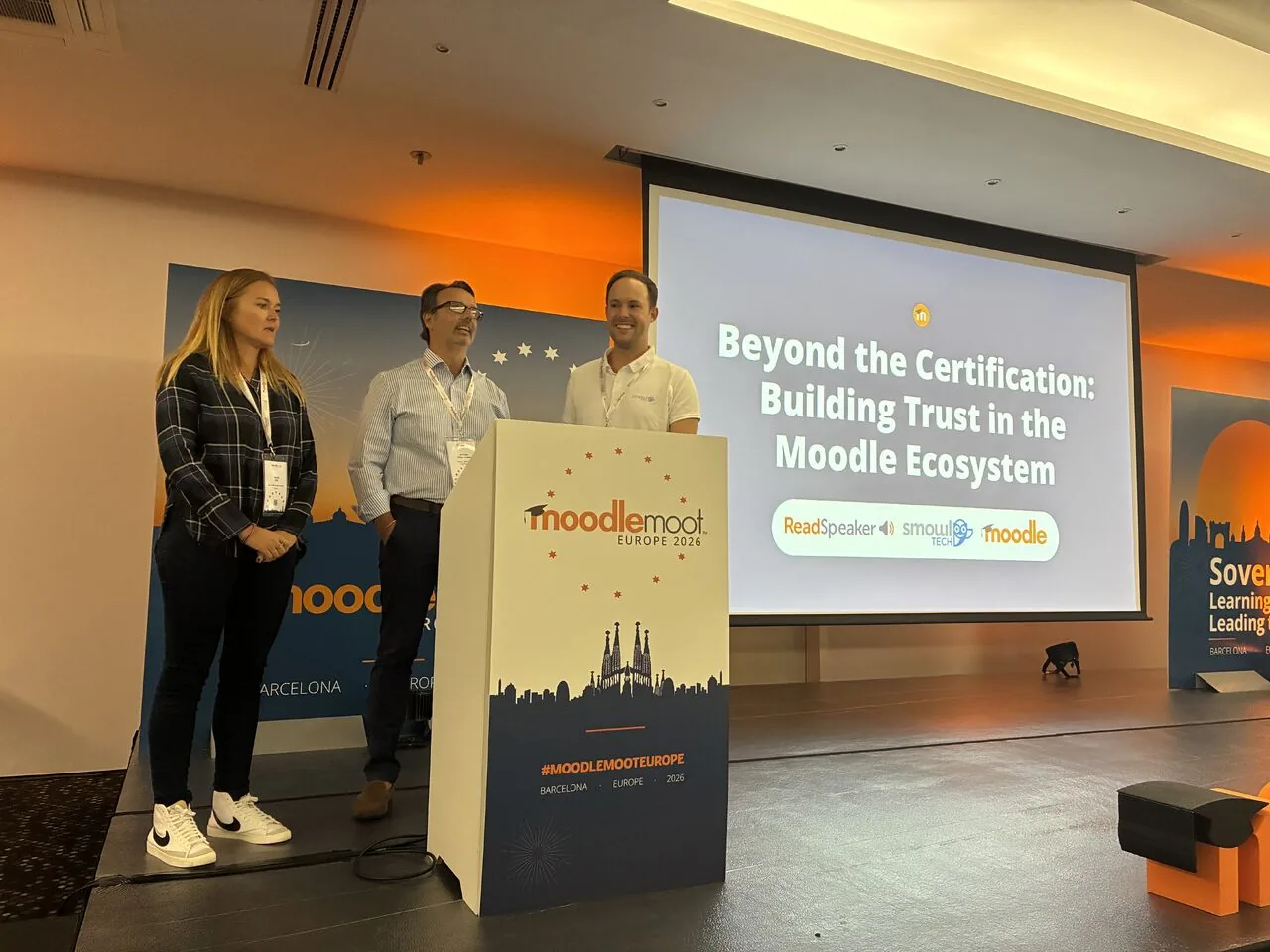
At the 2026 ILIAS Conference, Richard Powers from the University of Stuttgart and Katrin Schramm from ReadSpeaker explored what UDL 3.0 can look like in the ILIAS LMS, and how technology can help put these principles into practice.
Their starting point was a simple question: who is expected to adapt, the learner or the LMS?
The answer has implications beyond accessibility. The LMS and the wider learning experience need to adapt to the reality of learners, their different contexts, preferences, and ways of accessing content.
Understanding UDL 3.0
UDL 3.0 builds on the idea that learner variability should be considered when learning environments are designed. Rather than creating one standard pathway and adding accommodations when barriers appear, UDL encourages educators and learning technology teams to anticipate variability and provide meaningful options from the beginning.
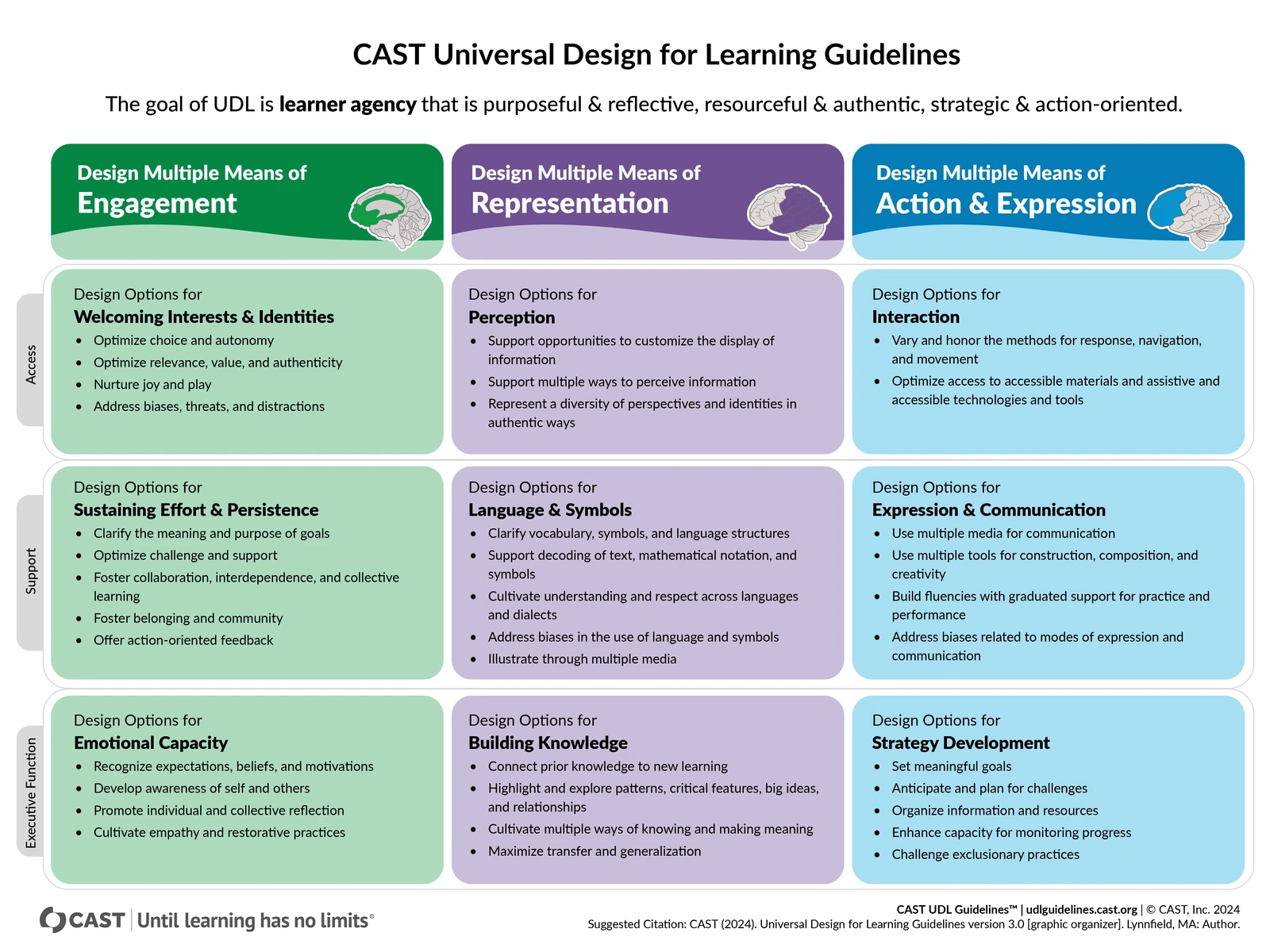
The framework focuses on three areas:
Engagement: why do I learn, and how can I stay motivated?
Representation: how can I access and understand the information?
Action and Expression: how can I participate and demonstrate what I know?
The aim is not to provide more options simply for the sake of choice. It is to give learners purposeful flexibility and greater agency while keeping the learning goals consistent.
(enlarge image)CAST (2024), Universal Design for Learning Guidelines version 3.0, udlguidelines.cast.org.
ReadSpeaker has been awarded the Universal Design for Learning (UDL) Product Certification from CAST (opens in a new tab), the nonprofit education organization that created the UDL framework. This certification validates that ReadSpeaker’s solutions are intentionally designed to support learner variability and advance equitable access to learning.
What does UDL look like in ILIAS?
ILIAS provides an environment where these principles can be considered as part of the learning experience itself.
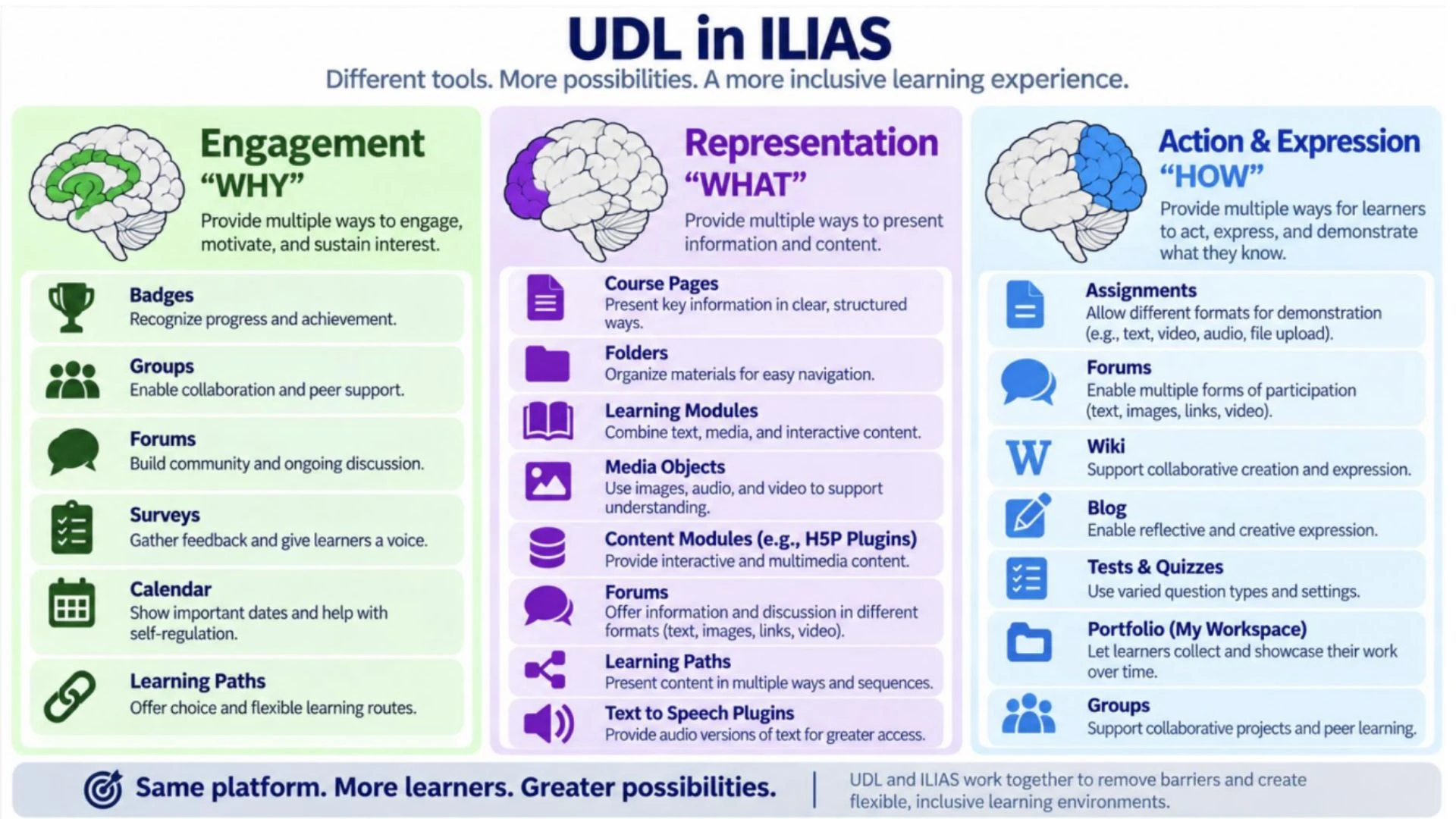
A UDL-oriented approach in ILIAS can include:
Engagement: choice, relevance, collaboration, peer coaching, clear expectations, and progress
Representation: meaningful structure, accessible text, headings, alt text, and multiple ways to access content
Action and Expression: options for participation, practice, feedback, and demonstrating learning
The focus is on purposeful flexibility, not creating additional work or offering more options without a clear learning benefit.
For example, providing different ways to access content can make a course more flexible without changing what learners are expected to understand. The same applies to how learners engage with activities, collaborate with others, receive feedback, or demonstrate their knowledge.
This is where the design of the LMS becomes important. If learners have to leave the learning environment to find the tools they need, the flexibility of the experience is reduced. When those options are available within the environment they already use, they become part of the normal learning experience.
Bringing text to speech into ILIAS
Text to speech (TTS) is one example of how an LMS can offer learners another way to access and engage with content.
With ReadSpeaker for Education integrated into ILIAS, learners can access audio alongside written content, supporting multimodal learning and allowing them to choose how they interact with course materials.
This can be useful in many different situations. A learner may prefer to listen while following the text, use audio when reading a long document, or switch between reading and listening depending on the context.
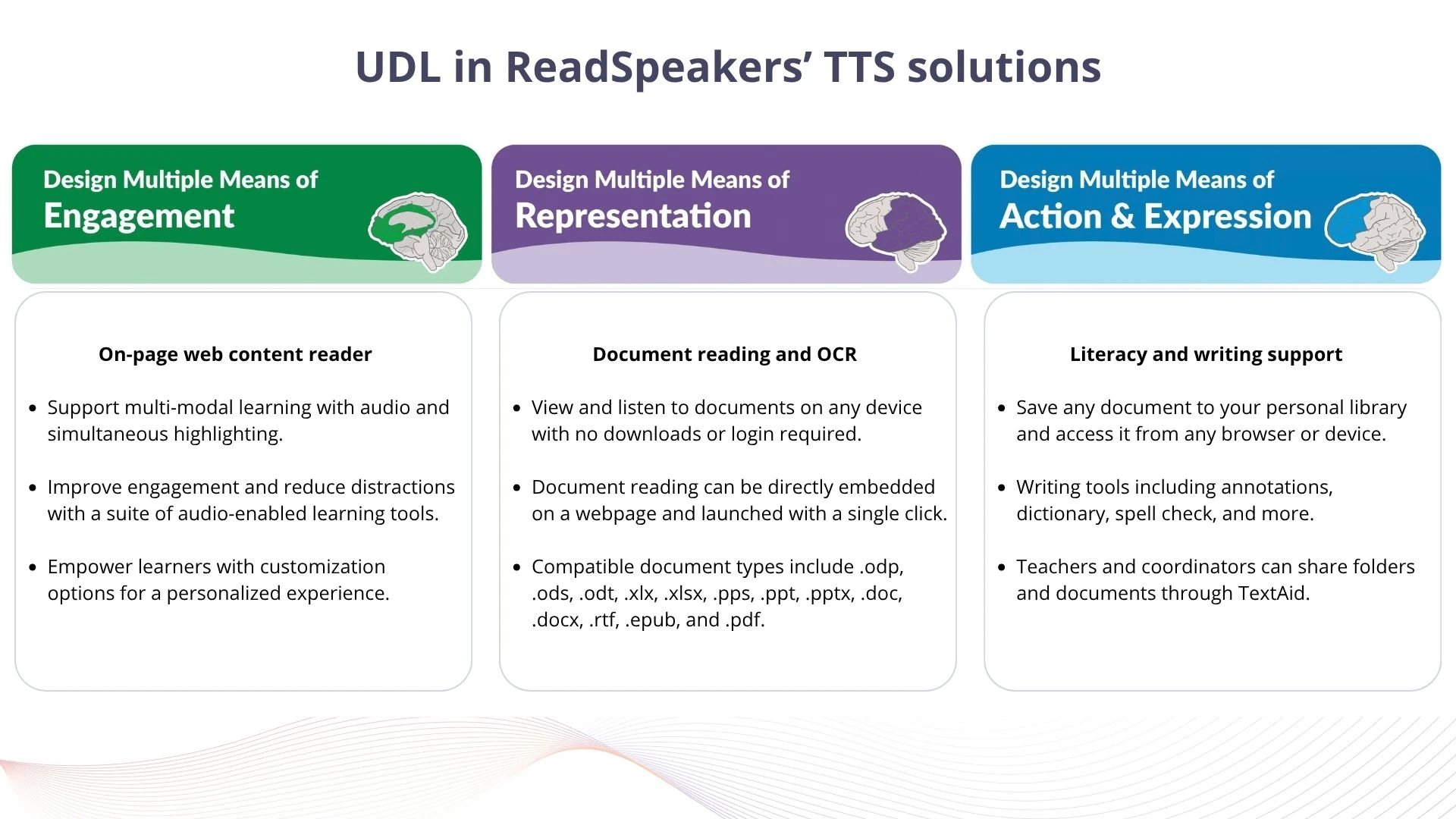
The presentation at the ILIAS Conference highlighted several ways ReadSpeaker solutions can support this approach, including audio with synchronized highlighting, customizable reading options, and speech-enabled online content and documents.
The important point is that TTS does not need to be treated only as an accommodation for individual learners. When it is available as part of the learning environment, it can become another way for learners to access the same content.
This is closely aligned with the Representation principle of UDL: provide learners with meaningful ways to access and understand information.
ReadSpeaker’s education solutions can also support additional reading, writing, and study needs, giving learners more ways to interact with content according to their individual circumstances.
A UDL approach: from accommodation to prevention
Traditional accommodation often starts when a barrier has already affected a learner: a barrier appears, the learner struggles, and an accommodation is added.
A UDL approach starts earlier: anticipate variability, remove barriers, then add meaningful options.
This does not mean that individual accommodations are no longer needed. Instead, it means that some barriers can be addressed through the design of the learning environment itself.
For an ILIAS-based learning experience, this raises practical questions:
Can learners access important content in more than one way?
Are accessibility features available within the LMS?
Can learners choose the tools that work best for their context?
Does the learning environment support different ways of engaging with content?
Which barriers can be addressed before a learner has to ask for support?
These questions shift the focus from adapting the learner to designing a learning environment that is more responsive to learner variability.
Putting UDL into practice in ILIAS
The combination of ILIAS and ReadSpeaker provides one practical example of how UDL principles can become part of the everyday learning experience.
Rather than adding a separate tool that learners have to find and open, ReadSpeaker text-to-speech tools can be integrated into the ILIAS environment, giving learners access to TTS as part of the content they are already using.
For institutions looking to introduce UDL principles into ILIAS, this provides a practical starting point: identify where learners may encounter barriers, consider where additional choice would improve the experience, and look for ways to build those options directly into the LMS.
The goal is not to create a different learning experience for every learner.
It is to create an ILIAS learning environment that is flexible enough to support more learners within the same learning experience, while giving them meaningful choices in how they access and engage with content.
A practical example from the University of Stuttgart
The University of Stuttgart provides a useful context for exploring what this approach can look like in practice.
In their presentation, Richard Powers and Katrin Schramm discussed how ILIAS can support UDL principles by combining accessible content, meaningful choice, and multiple ways of engaging with learning materials. The focus is not on creating more work or more options for their own sake. It is on designing an environment where learners have purposeful ways to access and interact with learning.
As an educator working with future teachers, I see ReadSpeaker as much more than an accessibility tool. The suite of audio and translation features champion inclusive education by giving learners greater flexibility to perceive and engage with content. Many students benefit from listening as they overcome barriers with reading, while others understand and retain information better when they listen and read simultaneously.
For learners who experience barriers with “text-only” materials, so frequent in ILIAS and today’s LMSs, these options empower learners and make learning fun. Integrating ReadSpeaker with ILIAS gives learners significant agency to choose the approach that works best for them, so they succeed instead of giving up because their learning preferences are ignored.
(enlarge image)
Richard J. Powers, University of Stuttgart, Department of Education
This perspective also reflects a broader opportunity for institutions using ILIAS: accessibility and learner flexibility do not have to sit outside the core learning experience. They can be part of how the LMS is designed and used.
ReadSpeaker’s integration with ILIAS makes text to speech part of that environment, helping institutions introduce audio and multimodal access without requiring learners to move between different tools or platforms.
Would you like to learn more about how ReadSpeaker integrates with the ILIAS ecosystem to support a UDL approach and improve the learner experience?
Discover how ReadSpeaker and SMOWL combine academic integrity and accessibility to support reliable, inclusive online assessments within the Moodle ecosystem.
How Moodle Marketplace and Certified Integrations make it easier for institutions to find trusted solutions and build more inclusive learning experiences.
Over the past year, we’ve immersed ourselves in the digital assessment community, through conferences, webinars, research, podcasts, and conversations with assessment leaders. Along the way, several themes have consistently emerged. These are the ideas we believe are shaping the future of accessible digital assessment.
·24 min read
We build ethical technology that respects every user. Your privacy is no exception. Before you choose, we measure how the site is used without any cookie and without identifying you. Everything else waits for your consent.

 (enlarge image)
  (enlarge image)
  (enlarge image)
 (enlarge image)