Education
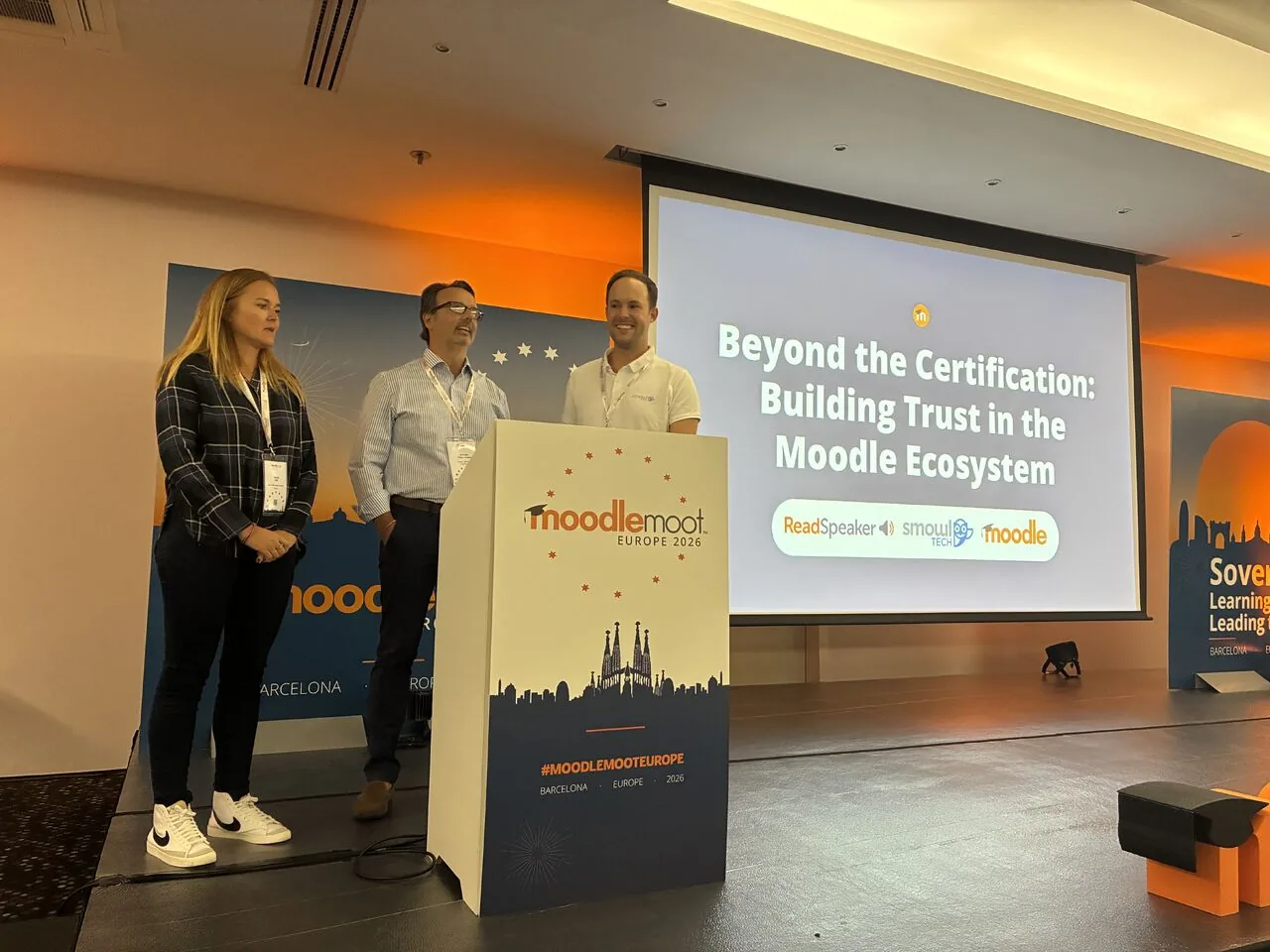
Integrity Meets Inclusion: Building Reliable Online Assessments in the Age of AI
Discover how ReadSpeaker and SMOWL combine academic integrity and accessibility to support reliable, inclusive online assessments within the Moodle ecosystem.
May 31, 2022
Why is EPUB 3 the preferred e-book format in the digital publishing industry? Find out by learning about the benefits of this unique standard.
The debate between the printed book and the e-book seems to have settled into something like a draw. In 2020, e-books accounted for only 18% of total book sales. That would seem to indicate that, as more traditional readers argue, paper books are far from disappearing. But that same year, e-books also saw their largest year-on-year increase in sales to date. In April 2020, digital publishers sold 5.2 million more e-books than in April 2019.
And yes, the pandemic probably had something to do with it. “The pandemic made the digital format more desirable, since e-books can be bought instantly from home and reading them is also a germ-free experience,” Kristen McLean of the consumer analytics group NPD Books explained to Publishing Perspectives in 2021.
As these figures show, e-books do not need to dominate traditional publishing to grow in popularity, and with this growing popularity of e-books comes the need for an industry-standard format for accessibility. A standard called EPUB 3 meets this need (see the sidebar below for an introduction to the EPUB format).
In fact, as early as March 2013, the International Publishers Association announced its endorsement of EPUB 3 for accessible publishing, stating that “we strongly urge all stakeholders in the publishing industry to adopt EPUB 3”, so that the sector “could achieve a global, interoperable and fully accessible standard for e-books and other digital publications.”
In a nutshell, EPUB is the standard format for digital publishing, and EPUB 3 is the latest version of this format. By incorporating HTML5 and other languages, EPUB 3 makes it possible to create texts that are more interactive and have more features than ever.
The EPUB standards (including EPUB 3) were first developed by the International Digital Publishing Forum (IDPF), the organization in charge of standards for the digital publishing industry. In 2017, however, the IDPF merged with the World Wide Web Consortium (W3C), the international body responsible for internet standards.
The EPUB specifications are currently managed by the W3C EPUB Working Group, with recommendations and analysis from the same body's Publishing Community and Publishing Business groups.
That is all very well, but what does it mean for the publishing industry as a whole? For one thing, EPUB 3 was created in response to criticism of earlier versions of EPUB, which were said to be unsuitable for certain publications (such as comics), to lack the ability to include notes, to be limited in the languages available, to be incompatible with multimedia or interactive content, to be poor at supporting navigation, and to fall short of the necessary accessibility standards, in particular the W3C's own Web Content Accessibility Guidelines (WCAG).
The list is long, yes, but EPUB 3 has largely solved these problems. This is shown by the endorsement the format has received from the main international bodies representing publishers. If the publishing sector keeps moving towards the e-book and away from traditional print media, every type of text will need to be compatible with an industry-standard format. Experts consider that EPUB 3 meets that goal.
But EPUB 3 is far from the only e-book format in use today. So why is it the only one endorsed by the trade groups of the publishing industry?
The greatest advantage of EPUB over competing formats is that it is an open standard.
It is therefore not a proprietary format like Amazon's AZW or Adobe's PDF, so it can be used more widely. EPUB was developed from the start to be universal, a true industry standard, so that every e-reader could be an EPUB 3 reader if manufacturers adopt its rules.
By establishing this industry standard for accessible publishing, the ability to create e-book content comes within reach of those who previously had no way to do so. For example, when different e-readers work with different formats, it is hard for small publishers to create content with a wide reach. Instead of creating an e-book accessible to all readers, a small publisher would have to focus on one format or another, and so miss the opportunity for their e-book to reach as many readers as possible. Broadening availability is part of the goals of EPUB.
For writers, adopting an industry standard for e-books makes it easier to publish their work in many media, and gives them the chance to reach as many readers as possible.
EPUB 3 also promises an excellent reading experience. It offers features such as pop-up footnotes, navigation from within the text itself, optimized interactivity, enhanced images, synchronization of formats (text, audio, video…) and reading aloud (TTS) in e-books.
As if all this were not enough to recommend EPUB 3, the format also offers a compelling set of additional benefits that explain why it is the standard the global digital publishing industry turns to.
Looking for a more natural read-aloud experience for your digital publishing projects? Contact ReadSpeaker to talk about dynamic, real-time TTS (text-to-speech) solutions that are platform-independent and compatible with all the latest web browsers.
The way texts are bought and consumed changed forever when e-readers came onto the market. But even that fundamental change seems relative when we look at it today, some time after it appeared. Nowadays, you do not even need a dedicated e-reader to buy and read texts. We can do it on our smartphone, an mp3 player, a laptop or any other device with an internet connection.
Of course, creating texts that are interactive and include multimedia content that plays perfectly on all those devices brings some challenges. That is where EPUB 3 comes in. This universal format includes some highly valuable improvements for digital publishing:
The specific promise of EPUB 3, and of digital publishing in general, is the ability to reach more people. And this applies whether you are trying to get your content to readers with disabilities or trying to stand out from the rest to attract readers who demand value-added options. Interactive and accessible texts open the doors to more readers at home, in the classroom and beyond. And read-aloud capability opens those doors even wider.
To find out more about read-aloud solutions for the digital publishing sector, contact ReadSpeaker today.
Education
Discover how ReadSpeaker and SMOWL combine academic integrity and accessibility to support reliable, inclusive online assessments within the Moodle ecosystem.
Education
How Moodle Marketplace and Certified Integrations make it easier for institutions to find trusted solutions and build more inclusive learning experiences.
Education
See how ILIAS and ReadSpeaker's text-to-speech technology work together to create more flexible learning experiences, with insights from the University of Stuttgart.