Education
Integrity Meets Inclusion: Building Reliable Online Assessments in the Age of AI
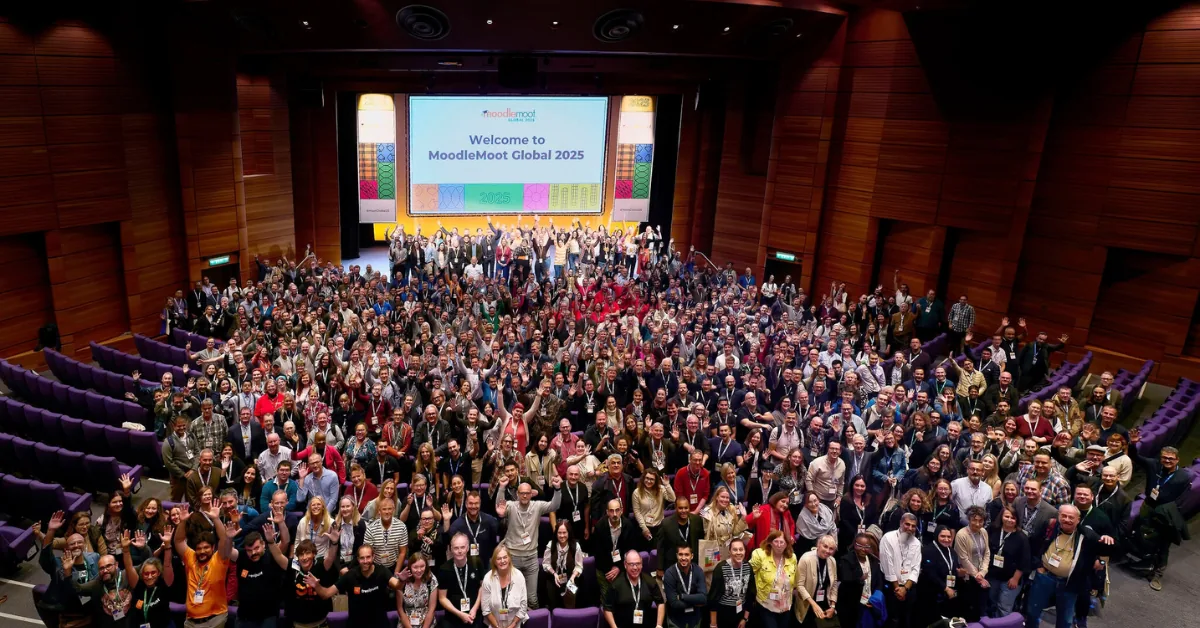
Discover how ReadSpeaker and SMOWL combine academic integrity and accessibility to support reliable, inclusive online assessments within the Moodle ecosystem.
January 5, 2024
Edtech is changing the way we run assessments in education. How do we get the benefit for all of our students equally? Learn from the experts.
A 2022 survey of U.S. undergraduates revealed a surprising trend: Only 5% (opens in a new tab) of respondents said they use assistive technology (AT) to accommodate a disability.
When shown a list of AT, however, at least 18% called each tool “necessary.” For example, 20% of students said they rely on digital magnifiers. More than a quarter said they need text to speech (TTS).
If only 5% of these students have disabilities, AT must be spilling outside the bounds of its original use case.
As teachers and students learn to depend on edtech, the line blurs between “assistive technology” and the means by which all students learn, regardless of disability status.
But teachers don’t just teach. They must also measure the results of their teaching. Edtech is advancing faster than ever, and it’s introducing new questions about how we assess student progress:
We asked a panel of educators and edtech specialists these questions. Ultimately, we wanted to talk about who today’s assessment technologies are designed to help.
The answer, according to the principles of Universal Design for Learning, is everyone.
Before we can discuss edtech for assessments, we need to decide what we mean by “assessment.” Ginger Dewey, our Educational Development Manager, offers a pithy definition.
“An assessment, in education, is anything you grade. Assessments are not just tests. Assessments can be group work. They can be assignments. They can be research papers.”
If it helps you measure a student’s progress, it’s an assessment, Dewey says. That broadens the field of assessment technology well beyond Scantron sheets and number 2 pencils to include anything that contributes to student grades.
So today, a technology-based assessment is any graded task with a digital component, whether it’s an AI-assisted research paper or an online standardized test.
As we’ll see, this definition encompasses an increasingly wide range of teaching and learning tools.
All the experts we spoke to pointed to the COVID-19 pandemic as a powerful accelerator for the adoption of digital assessment tools.
“Before the pandemic, there was a pre-existing generalized move toward incorporating digital technologies into assessments, especially in the formative and low-stakes environments,” said Nina van der Behr of Learnosity. (opens in a new tab) “But the adoption timeframe was lengthy.”
“The pandemic was like a shot of adrenalin for digital-based assessment, which could be conducted remotely to ensure safety during the outbreak.”
At the same time, edtech was advancing rapidly, especially given the emergence of commercial AI in the latter days of the pandemic. This confluence of events led to increasing use of assessment technologies of all sorts, from the earliest grades into higher education.
You might think of some of these as assistive technologies and others as general assessment tools. As we’ve mentioned, however, these categories are becoming less rigidly defined. If you’re considering assessment technology for your students, look closely at these five solutions:
These software applications are digital hubs for the whole learning process. They support everything from online delivery of classroom content to tracking student progress.
Learning management systems were prevalent prior to the pandemic, but became essential during lockdowns, with 70% (opens in a new tab) of corporate learning and development departments in North America using them in 2020. They’ve stuck around ever since, said Kamil Rejent of Survicate. (opens in a new tab)
“Many of the technologies that were rapidly adopted during the height of remote learning have not only persisted, but have become integral to the modern classroom.”
“Learning management systems like Moodle (opens in a new tab), Blackboard, (opens in a new tab) and Canvas (opens in a new tab) continue to be essential, serving as centralized platforms for assignments, grading, and feedback,” he said.
Educators are also relying on digital assessment systems outside the LMS, said Rejent.
“Online quizzing tools such as Kahoot! (opens in a new tab) and Quizlet (opens in a new tab) remain popular, offering an engaging way to assess student understanding,” he said. These learning platforms often gamify assessments, creating more engaging digital experiences for students. They also simplify delivery of assessment results for teachers.
Beyond LMSs, dedicated e-assessment platforms offer specialised functionalities such as advanced proctoring, sophisticated marking, and in-depth analytics.
As Bart Beemsterboer of Cirrus (opens in a new tab) notes:
During the COVID-19 pandemic, they were crucial in enabling universities and professional testing organisations to continue high-stakes testing remotely. Platforms like Cirrus, offering integrated proctoring, plagiarism detection, and Linear On the Fly Testing, not only enhance the security and integrity of assessments but also ensure a flexible, equitable testing experience with assistive technology integrations like ReadSpeaker’s text-to-speech solution.
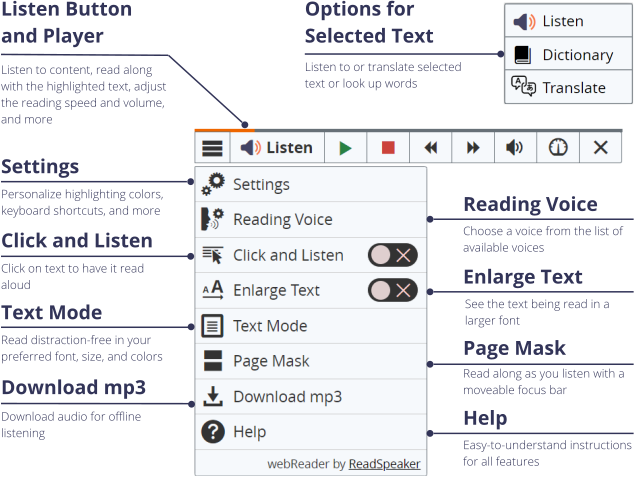
Digital focus tools include page masks, text enlargement tools, and distraction-free modes that remove images. Even a widget that lets users change fonts and colors can be a focus tool.
Digital assessments involve reading screens, and many students struggle to focus in this medium. They might have developmental disabilities, ADHD, dyslexia, anxiety, or common screen fatigue.
If assessments measure student progress, it’s crucial to define your learning goals and test for those goals specifically. That requires removing barriers to engagement with the material. Digital focus tools help these students understand assessment materials. That way, you can be sure you’re assessing your learning objectives, not the student’s current level of focus.
Artificial intelligence brings new capabilities to assessment technology. For example:
As AI continues to advance, new strengths and weaknesses will emerge. However the technology develops, it’s likely to change the way we handle assessments in education.
Even with the most advanced AI testing systems, however, students must be able to understand the content you place before them. Often, that requires an aural component. Two thirds (opens in a new tab) of learners prefer a multimodal approach to their content: for instance, reading and listening at the same time.
 (enlarge image)
 Listening is also crucial for second-language learners, people with learning or developmental disabilities, struggling readers, and aural learners. Text-to-speech technology, which reads written text out loud, allows students to listen. It gives the individual a choice about how information is presented. That makes assessment content available to a broader range of learners.
Our panel agreed that every digital form of assessment should include an element of TTS.
So should we still think of TTS as an accommodation, available to students with individualized education plans (IEPs), or should we offer it to everyone? According to the Universal Design for Learning framework, we can do both.
Universal Design for Learning (UDL) is an approach to teaching that emphasizes individualized experiences. Every student has different needs, UDL says. The only way to teach them all effectively is to offer multiple ways to engage with material, including assessments.
The UDL Guidelines (opens in a new tab) ask educators to present lessons in a few ways at once. Let students choose to read, listen, or both, for example. What we traditionally think of as assistive technology is recast under this framework as one option among many.
Crucially, that avoids leaving behind students with disabilities. It also reduces stigma, breaking down the barrier between “disabled” and “non-disabled.” With UDL, we strive to provide the tools each student needs to meet learning goals.
Of course, technology-based assessments can absolutely be accommodations. But they don’t stop there. Edtech provides flexibility for every student, each of whom has a unique set of needs, preferences, and abilities. This technology is equally at home in summative assessments and diagnostic assessments, and provides an individualized way to evaluate student performance.
However edtech develops going forward, TTS can help assess learning outcomes. Rather than testing a student’s reading skill alone, TTS helps educators get a true picture of student attainments.
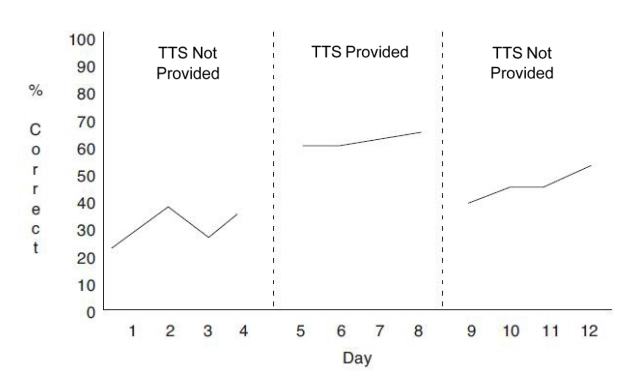
How do we know? Because results for assessments in education have been shown to improve significantly when TTS is offered as a test-taking tool.
However, as our panelist Kamil Rejent said, “the effectiveness of TTS is contingent upon its quality.”
“Natural sounding TTS systems enhance the learner’s experience, while robotic tones can be distracting. Bad TTS isn’t of much use.”
ReadSpeaker offers natural, lifelike TTS voices in many languages, dialects, and speaking styles. We use proprietary machine learning models to ensure extraordinary quality, so your students can focus on the content.
Our TTS-powered reading, writing, and studying tools integrate natively into all major LMS platforms. They provide a seamless way to offer TTS in your digital testing environment, without the need for multiple apps or windows.
Want to learn more about the benefits of TTS for your technology-based assessments?
Contact ReadSpeaker todayEducation
Discover how ReadSpeaker and SMOWL combine academic integrity and accessibility to support reliable, inclusive online assessments within the Moodle ecosystem.
Education
How Moodle Marketplace and Certified Integrations make it easier for institutions to find trusted solutions and build more inclusive learning experiences.
Education
See how ILIAS and ReadSpeaker's text-to-speech technology work together to create more flexible learning experiences, with insights from the University of Stuttgart.