Education
Building Trusted Learning Ecosystems in Moodle That Are Ready for What's Next
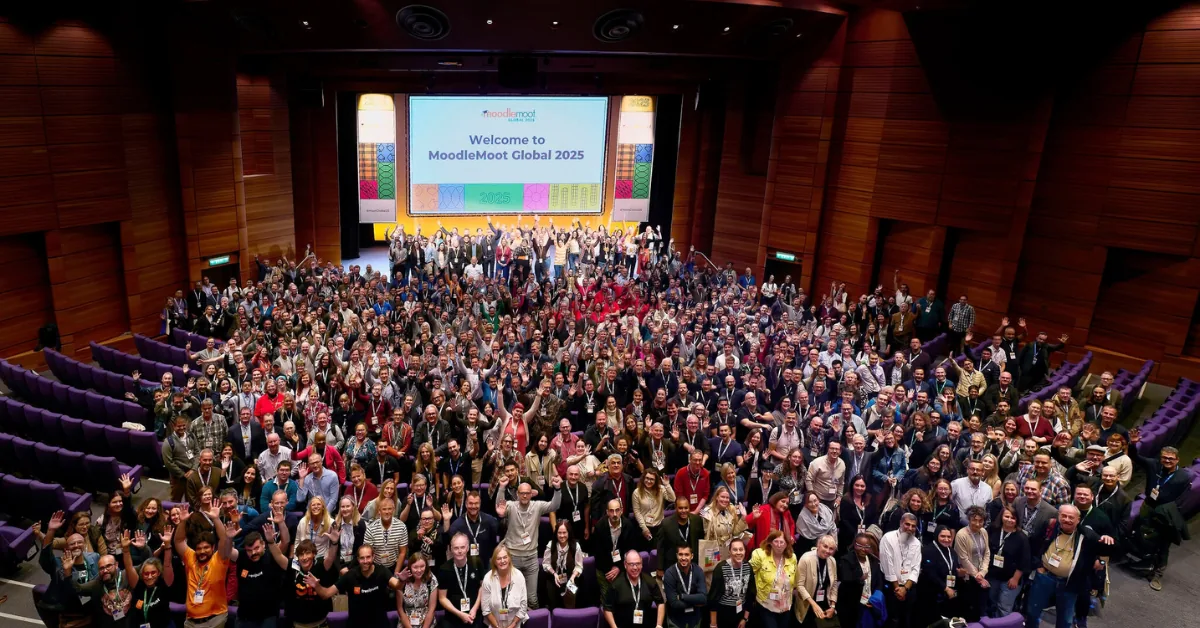
How Moodle Marketplace and Certified Integrations make it easier for institutions to find trusted solutions and build more inclusive learning experiences.
February 13, 2026
Text-to-Speech (TTS) technology is often viewed as a simple tool for accessibility compliance, but its true impact in digital education is much greater and firmly… Read the full article
Text-to-Speech (TTS) technology is often viewed as a simple tool for accessibility compliance, but its true impact in digital education is much greater and firmly rooted in established learning science. For digital education content providers, understanding the pedagogical value of embedded TTS can be game-changing.
Research tells us that the impact of TTS technology reaches well beyond mere compliance with accessibility standards. When thoughtfully integrated into a digital learning environment, TTS can support processing and comprehension, help to manage cognitive load, and increase learner engagement. For e-learning content providers and educators, these benefits make TTS more than an add-on to check a box. Instead, embedded TTS should be considered an integral piece of a pedagogically sound learning experience, supporting a wide variety of learners and needs.
Visit our blog about student empowerment to find out how TTS benefits extend beyond accessibility.
Grounded in cognitive psychology and educational research, learning science tells us that individuals learn better when information is presented through multiple modalities rather than a single format. This understanding is tied to the Dual Coding Theory (DCT) which asserts that humans possess two distinct, yet interconnected, cognitive subsystems for processing information. One subsystem focuses on verbal information such as written text and the other on non-verbal information such as sound. When learners are presented with information in both verbal and non-verbal forms (e.g., listening to text-to-speech with simultaneously highlighted text), they form stronger memory traces because the information is coded twice. This dual encoding makes the information easier to retrieve and process later, resulting in better comprehension and recall. sciencedirect.com (opens in a new tab)
The use of multiple modalities to present information, such as combining text with auditory narration, serves several critical cognitive functions.
Cognitive Load Theory (CLT) suggests that individuals have limited working memory resources. When a learner’s cognitive capacity is overloaded with decoding complex text, fewer resources are available for comprehension and higher-order thinking. Integrating embedded text-to-speech can free up resources by supporting auditory processing with visual decoding. Processing efficiency is further improved when learners are able to select the pacing of the supplemental audio. For learners who experience reading challenges or have limited vocabulary, reducing cognitive load with customizable audio can make difficult content more approachable and less frustrating. sciencedirect.com (opens in a new tab)
Universal Design for Learning seeks to provide flexible ways for learners to access information. TTS aligns with UDL guidelines by providing an alternative pathway to content that respects learner choice and agency. We can’t assume every student experiences the world through a single channel, we therefore must present materials in various ways. Similarly, to provide multiple means of action and expression, we should let students choose to present their own schoolwork in various forms, including different media. In both cases, the key UDL recommendation is to support different ways of engaging with information and a good TTS tool instantly doubles your media choices by adding spoken language alongside written text, removing barriers for students, especially those who struggle with reading.
Brian St. Amour, Director of eLearning at Temple College in Texas witnessed the benefits of TTS for students. He states, “Really, we were enlightened. I thought that this was just going to be a slam dunk to accommodate a certain population of students when in reality, feedback anecdotally was, ‘Wow, I like that. I like the ability to listen’…A really good solution and it embeds really well. It gave us so much more for our students than we realized.”
To read more about text-to-speech and UDL, visit our blog about Learner Agency.
A growing body of research has uncovered the benefits of TTS for reading comprehension in learners of all ages with diagnosed reading difficulties as well as the benefits for those without them.
From a learning science perspective, embedded TTS should be viewed as a necessity rather than a way to tick an accessibility checkbox. TTS should be treated as an integral piece of pedagogically sound instruction, leading to measurable learner success through enhanced comprehension and cognitive processing.
To maximize impact in digital education, platforms should have TTS seamlessly embedded within learning content so it supports the learning flow rather than interrupting it. Learners should have control over pace, voice, and modality to match their individual preferences. Last, TTS should be paired with visual indicators to activate dual-modality learning. All of these can be accomplished through an embedded voice solution that supports students without friction.
Educational content providers and EdTech developers that integrate TTS with clear instructional intent, position their content to better serve diverse learners and achieve stronger learning outcomes. When implemented thoughtfully, text-to-speech becomes a transformative educational tool that can help digital content reach its full potential.
Education
How Moodle Marketplace and Certified Integrations make it easier for institutions to find trusted solutions and build more inclusive learning experiences.
Education
See how ILIAS and ReadSpeaker's text-to-speech technology work together to create more flexible learning experiences, with insights from the University of Stuttgart.
Education
Over the past year, we’ve immersed ourselves in the digital assessment community, through conferences, webinars, research, podcasts, and conversations with assessment leaders. Along the way, several themes have consistently emerged. These are the ideas we believe are shaping the future of accessible digital assessment.